Service Dogs and Working Dogs: National Dog Day 2026
National Dog Day, celebrated on August 26, honors all dogs especially working dogs like service dogs, military K9s, therapy dogs, and search-and-rescue dogs. These animals perform life-saving tasks, from guiding the visually impaired to detecting explosives. As of 2025, over 29,000 active assistance dog teams operate worldwide (ADI, 2025).
National Dog Day was founded in 2004 by pet lifestyle expert Colleen Paige. The mission goes beyond celebrating pets it shines a light on the dogs who serve, protect, and heal. This year on August 26, 2026, the spotlight belongs to every working dog who has ever worn a vest, badge, or harness.
Why Does National Dog Day Recognize Working Dogs?
Colleen Paige created the day to rescue 10,000 dogs annually and raise awareness of every role dogs play in human life including the roles most people overlook. Working dogs aren’t just companions. They are trained professionals whose jobs save lives every single day.
What Are the Different Types of Service Dogs?
Service dogs are trained to perform specific disability-related tasks for their handlers. The six main types are assistance. dogs, hearing dogs, mobility assistance dogs, medical alert dogs, psychiatric service dogs, and autism service dogs. Each type is legally protected under the Americans with Disabilities Act (ADA).
| Type | Who They Help | Key Tasks |
| Guide Dogs | Blind/visually impaired | Obstacle avoidance, navigation |
| Hearing Dogs | Deaf/hard of hearing | Alert to alarms, doorbells, names |
| Mobility Assistance Dogs | Physical disabilities | Retrieving items, balance support |
| Medical Alert Dogs | Seizure/diabetic conditions | Detect oncoming episodes |
| Psychiatric Service Dogs | PTSD, anxiety, depression | Interrupt behaviors, medication reminders |
| Autism Service Dogs | Autistic individuals | Safety support, emotional regulation |
According to Assistance Dogs International (ADI, 2025), mobility service dogs make up the largest category at 42% of all service dog placements, followed by autism service dogs at 21% and veteran PTSD service dogs at 17%.
What Are the Most Common Service Dog Breeds?
The most commonly trained service dog breeds include:
- Labrador Retriever calm temperament, highly trainable
- Golden Retriever gentle, sociable, excellent for medical alert roles
- German Shepherd loyal, intelligent, ideal for mobility and psychiatric roles
- Standard Poodle hypoallergenic, exceptionally trainable
- Labrador/Golden crosses combine the best traits of both breeds
How Can You Support Service Dog Organizations?
Leading organizations placing dogs at no cost to recipients include Canine Companions, Paws With A Cause, and Service Dogs for the Blind. Donations, puppy sponsorships, and volunteer fostering are the primary ways the public can help.
What Roles Do Military Working Dogs Play?
Military working dogs (MWDs) serve in detection, patrol, tracking, and search operations. As of February 2022, approximately 5,100 working dogs served across 40 federally managed U.S. programs (U.S. Government Accountability Office, 2022). The U.S. Military K9 Corps was officially founded in 1942.
Which Military Dogs Made History?
Three dogs stand out across more than a century of U.S. military service:
- Sergeant Stubby (WWI) A stray mongrel who joined the 102nd Infantry Regiment and became the most decorated war dog of World War I the only dog ever promoted to sergeant through combat.
- Chips (WWII) The most decorated dog in the Second World War, serving across multiple theaters of operation.
- Cairo The Belgian Malinois deployed with Navy SEALs during the 2011 raid that killed Osama bin Laden.
What Happens to Military Dogs After Service?
The Robins Law (2000) made it possible for military working dogs to be adopted after retirement. Handlers, law enforcement, and approved families can apply to adopt retired MWDs through the U.S. military’s official adoption program.
How Are Police K9 Units Trained?
Police K9s undergo specialized training in one or more disciplines narcotics detection, explosives detection, tracking, apprehension, and cadaver searches. Training typically takes 8–16 weeks at a certified academy. German Shepherds, Belgian Malinois, and Dutch Shepherds are the dominant breeds used in U.S. police K9 units.
What Types of Work Do K9 Police Dogs Perform?
| Discipline | Primary Breed Used |
| Narcotics Detection | Labrador, Beagle, German Shepherd |
| Explosives/Bomb Detection | Belgian Malinois, German Shepherd |
| Tracking and Search | Bloodhound, German Shepherd |
| Apprehension/Patrol | Belgian Malinois, Dutch Shepherd |
| Cadaver Recovery | German Shepherd, Labrador |
K9 officers who die in the line of duty are honored through the National Law Enforcement Officers Memorial and the United States Police Canine Association.
How Do Therapy Dogs Differ from Service Dogs?
Therapy dogs are not service dogs. They are certified to visit hospitals, schools, and disaster sites to provide comfort to multiple people. Unlike service dogs, therapy dogs do not have public access rights under the ADA. Certification is provided by organizations such as Pet Partners and the Alliance of Therapy Dogs.
Where Do Therapy Dog Programs Operate?
- Hospitals Reducing patient anxiety and aiding recovery
- Schools Supporting reading programs and stress relief during exams
- Courtrooms Comfort animals for child witnesses
- Disaster response On-site after traumatic events
Therapy dogs are not the same as emotional support animals (ESAs), which require no task training and have limited legal protections.
What Did Search and Rescue Dogs Do on 9/11?
More than 300 dogs participated in search, rescue, and recovery efforts at Ground Zero following the September 11, 2001 attacks (9/11 Memorial & Museum). FEMA-certified search and rescue (SAR) dogs were trained to detect living human scent. One SAR dog located the last living survivor 27 hours after the collapse.
SAR dogs specialize in three main environments:
- Wilderness Tracking lost hikers, missing persons
- Disaster response Collapsed structures, earthquakes, floods
- Water rescue Detecting submerged victims
What Qualifies You to Get a Service Dog?
To qualify for a service dog under the ADA, you must have a physical, sensory, psychiatric, or intellectual disability, and the dog must be individually trained to perform tasks directly related to your disability. There is no federal certification requirement, and you do not need a doctor’s note under ADA rules though many training organizations require documentation.
How Can You Get a Free Service Dog?
Several nonprofit organizations provide fully trained service dogs at no cost to qualified applicants. Organizations like Canine Companions, Paws With A Cause, and America’s VetDogs offer free placement for eligible individuals. Applications often involve a multi-step process and waiting periods, as demand consistently outpaces supply. ADI reports a current waitlist of 7,887 clients (ADI, 2025).
Can Anyone Say Their Dog Is a Service Dog?
No. Under the ADA, a service dog must be trained to perform specific tasks related to a disability. Misrepresenting a pet as a service animal is illegal in many U.S. states and carries fines. Businesses may ask two questions: “Is this a service animal required due to a disability?” and “What tasks has it been trained to perform?”
How Can You Honor Working Dogs on August 26?
- Donate to a service dog organization (Canine Companions, Service Dogs for the Blind, Paws With A Cause)
- Sponsor a puppy in training through Guide Dogs for the Blind or America’s VetDogs
- Share a story about a working dog on social media with #NationalDogDay
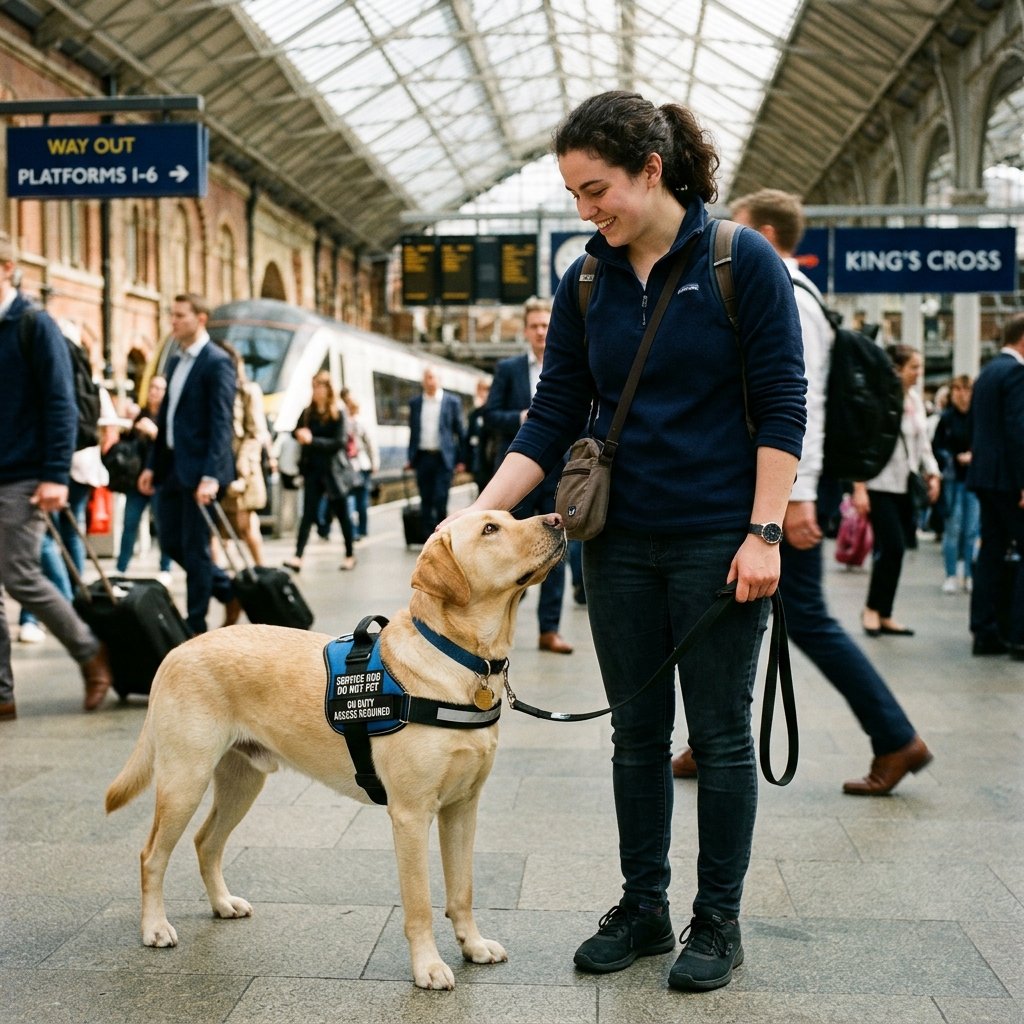
- Never distract, pet, or call to a dog in a service vest without the handler’s permission
Working Dog Charity Directory
| Organization | Focus | Website |
| Canine Companions | Service dogs (free placement) | canine.org |
| Paws With A Cause | Custom-trained service dogs | pawswithacause.org |
| Guide Dogs for the Blind | Vision impairment guide dogs | guidedogs.com |
| America’s VetDogs | Veterans & military service dogs | vetdogs.org |
| Pet Partners | Therapy dog registration | petpartners.org |
| Penn Vet Working Dog Center | SAR & detection dog research | vet.upenn.edu |
Frequently Asked Questions
How many assistance dog teams are active worldwide?
As of the 2025 ADI Census, there are 29,044 active assistance dog teams globally, with 15,521 in North America alone.
How long does it take to train a service dog?
Most service dogs require 18 months to 2 years of training before being placed with a handler.
What is the average cost of a trained service dog?
Training costs typically range from $15,000 to $50,000 depending on the dog’s specialty, though many nonprofits provide dogs at no cost to recipients.
How many dogs served at Ground Zero on 9/11?
More than 300 dogs participated in search, rescue, and recovery operations at Ground Zero (9/11 Memorial & Museum).
How many dogs are currently waiting for service dog placements?
As of the 2025 ADI Census, 7,887 potential clients are on waiting lists with accredited service dog organizations.
Are Belgian Malinois better police dogs than German Shepherds?
Belgian Malinois are increasingly preferred for patrol and apprehension work due to their lighter weight and higher drive. German Shepherds remain widely used for all-around K9 roles.
Can a therapy dog go anywhere a service dog can?
No. Therapy dogs do not have ADA public access rights. They are permitted only in facilities that specifically invite them, such as hospitals and schools.
How many new service dog teams were placed in 2025?
ADI accredited member organizations placed 4,291 new assistance dog teams in 2025.
What was the U.S. Military K9 Corps founded?
The U.S. Military K9 Corps was officially established in 1942, during World War II.
Are emotional support animals the same as service dogs?
No. Emotional support animals provide comfort through their presence but are not task-trained. They do not qualify as service animals under the ADA and do not share the same public access rights.